
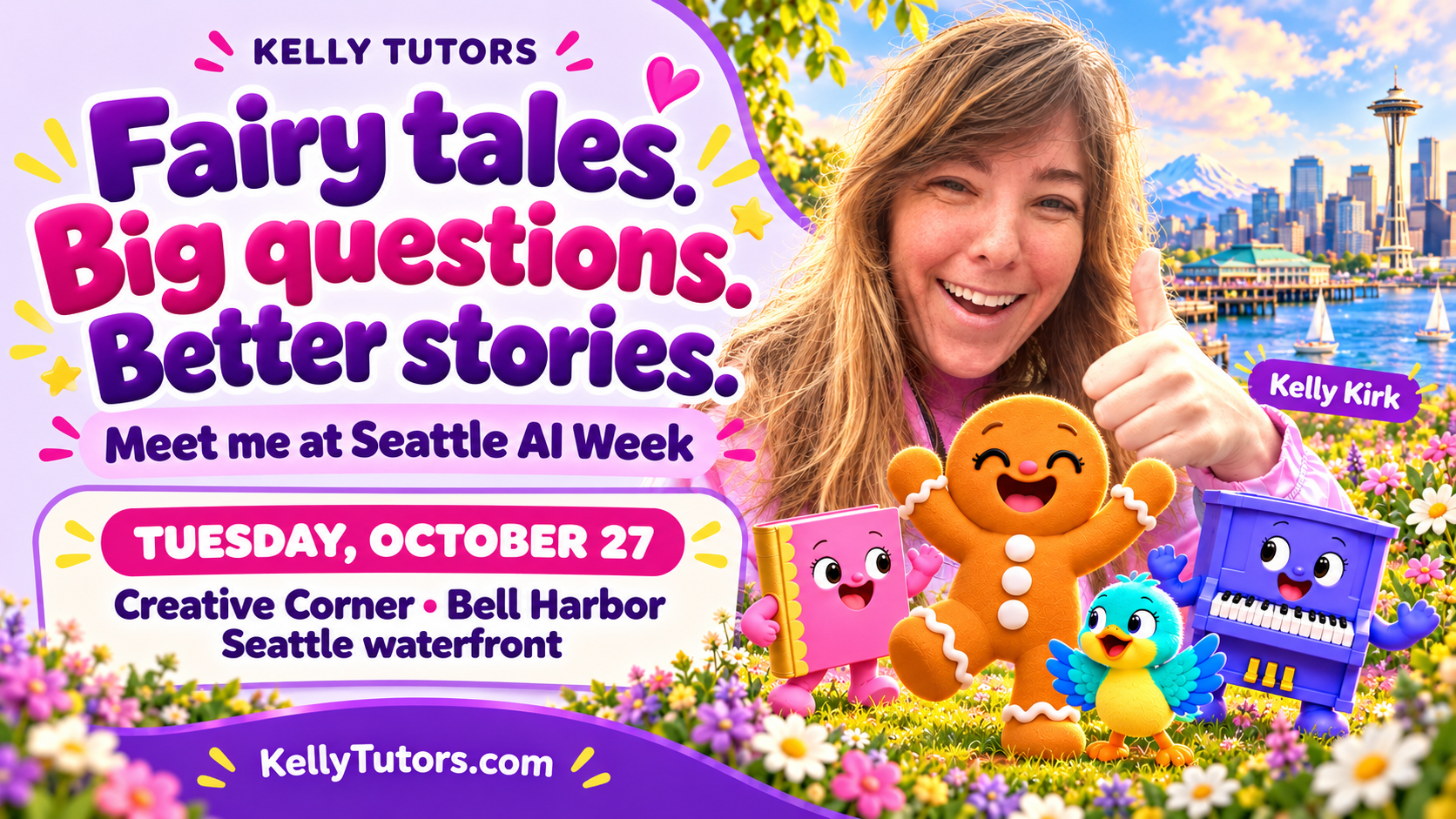
Note from Kelly: I was invited to host a booth at the AI Week Summit on October 27th. My booth is centered around sharing the problem: kids media is stuck in flight or fight mode. Read more below and help support this mission by becoming a fantastic funding founder: https://www.kellytutors.com/fairy-tales#donate.
Did your favorite childhood fairy tale teach you something wonderful or something you’ve spent adulthood unlearning?
I love imagination, adventure, beautiful illustrations, and a really good story. I also think we should question the lessons hiding inside the entertainment we give children.
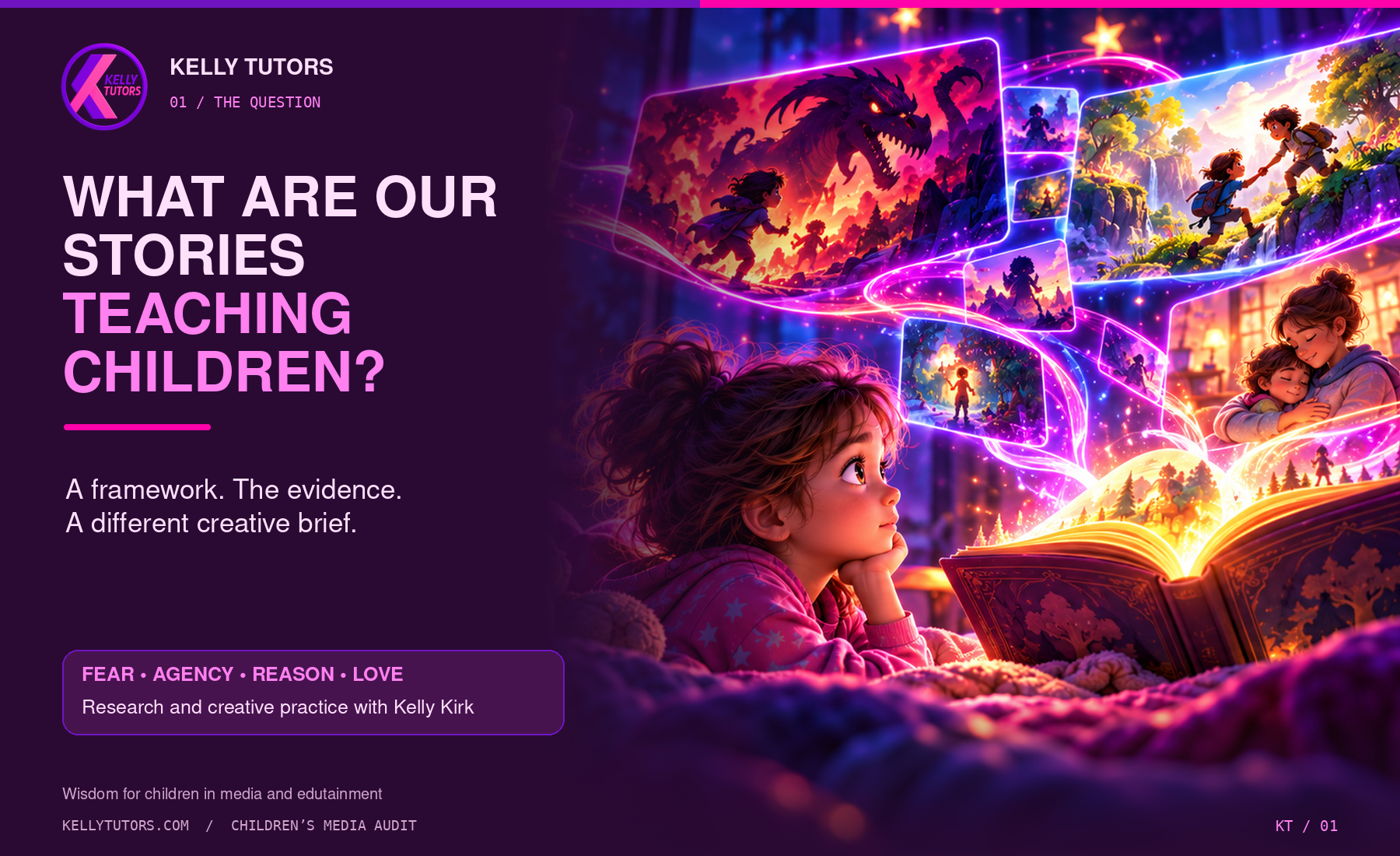
Who gets to make decisions? Who has to wait to be rescued? What makes someone worthy of love? Is safety something characters can help create, or something that disappears whenever the story needs excitement?
These questions sit at the heart of Kelly Tutors: children’s media and edutainment built around wisdom, agency, reason, love, and belonging.
The story underneath the story
A fairy tale can say one thing explicitly and model something else through its plot.
Depending on the version, Sleeping Beauty’s future is decided while she sleeps. The Three Little Pigs spend their story building, fleeing, and hiding from a threat. The Gingerbread Man runs from nearly everyone he meets, until the person offering help becomes the danger.
Those stories also offer imagination, humor, perseverance, and memorable characters. An audit makes room for both observations. We can love a story and examine it closely.
My question is: what does the character get to practice—and what does the story reward?
Does being beautiful bring love? Does obedience guarantee safety? Does kindness require ignoring warning signs? Can a character say no, ask a question, learn a skill, or change the plan?
Why Hawkins is part of my creative framework
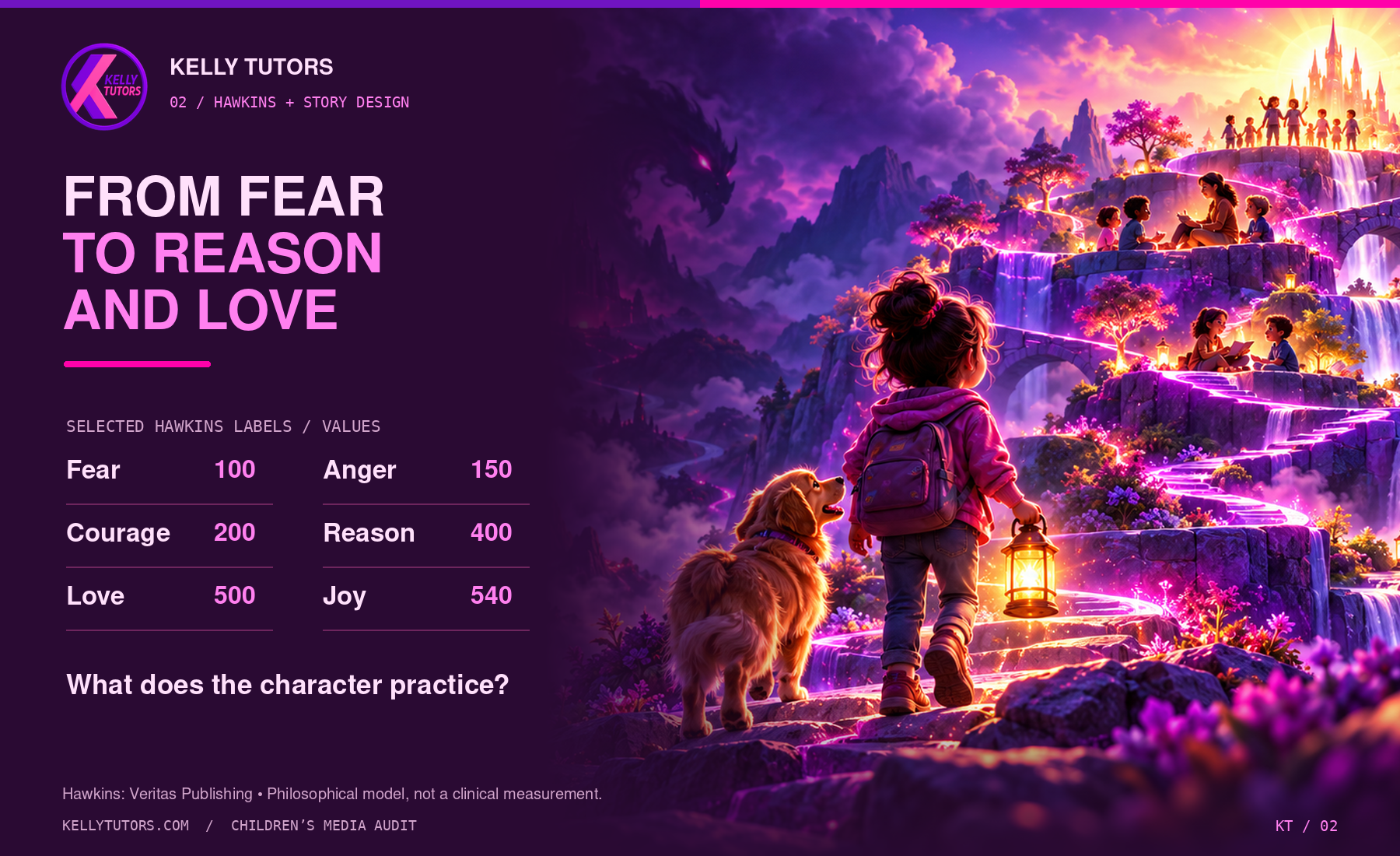
David R. Hawkins’ Map of Consciousness has influenced the way I think about emotional patterns in stories. His framework distinguishes states such as fear and anger from courage, acceptance, reason, love, joy, and peace.[1]
I use that vocabulary as a creative and philosophical lens, not a scientifically validated instrument for measuring consciousness, children’s brains, or the effects of a film. My story assessments are interpretations of narrative moments, not Hawkins-style muscle-testing calibrations.
The useful question for my work is concrete: when a character meets uncertainty, what happens next?
Do they panic, submit, or wait for rescue?
Do they investigate, ask for help, and make a decision?
Do relationships involve pressure and possession, or care and respect?
Does the ending demonstrate understanding, connection, and meaningful choice?
Fear, grief, and anger are normal human experiences. A frightened character isn’t a failed character, and a sad child isn’t operating at a lesser level of worth. I’m interested in what a story does with those feelings: whether it offers support, agency, and room to respond.
READ MORE ON THIS TOPIC… https://d6ur9k.s.gy/KellyTutorsStoryEmotion
Follow KT on Linkedin: https://www.linkedin.com/company/kellytutors
What published research contributes
There is a difference between noticing a pattern and demonstrating what that pattern does to children.
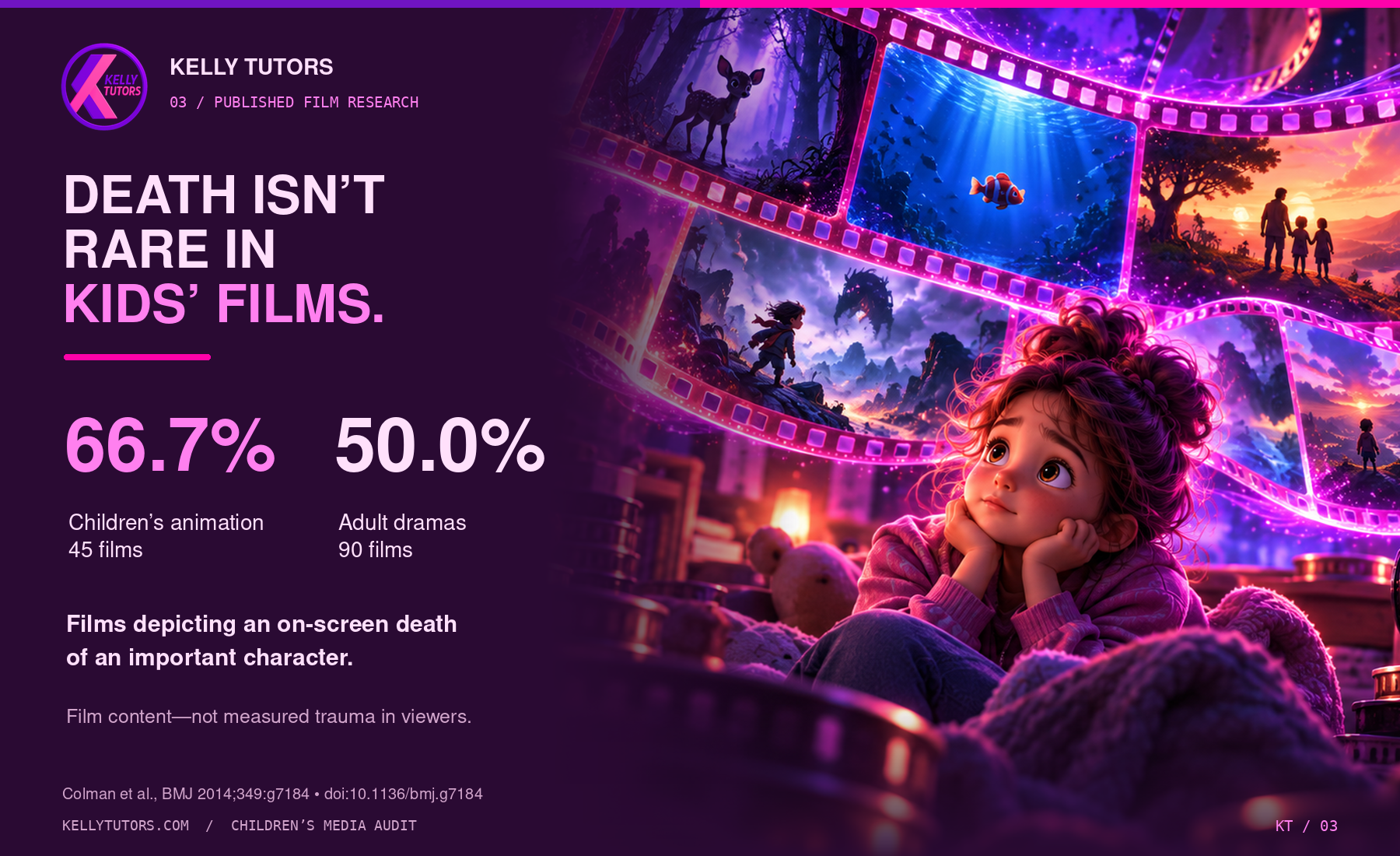
A 2014 study in The BMJ, “CARTOONS KILL,” compared 45 top-grossing children’s animated films with 90 adult dramatic films. About two-thirds of the animated films depicted the on-screen death of an important character, compared with half of the adult films. The study’s adjusted analysis also found a higher hazard of on-screen death in the animated-film group.[2]
That is a finding about the films in that sample. It is not evidence that two-thirds of children are traumatized by movies, and it doesn’t establish that a particular scene harms a particular viewer.
The paper’s often-repeated estimate for parental death—an adjusted hazard ratio of 5.76—had a very wide confidence interval, 0.98–33.9, and a P value of 0.053. I would not turn it into a universal “six times more dead parents” claim. The more useful starting point is that parental loss and on-screen death deserve thoughtful attention in stories presented to children.
READ MORE ON THIS TOPIC… https://www.kellytutors.com/blogs-for-parents-and-educators/what-the-research-says-about-death-and-trauma-in-childrens-movies
Fund the Rescued Fairy Tales and/or get your own copy of these books: https://www.kellytutors.com/fairy-tales
What my own story assessments contribute
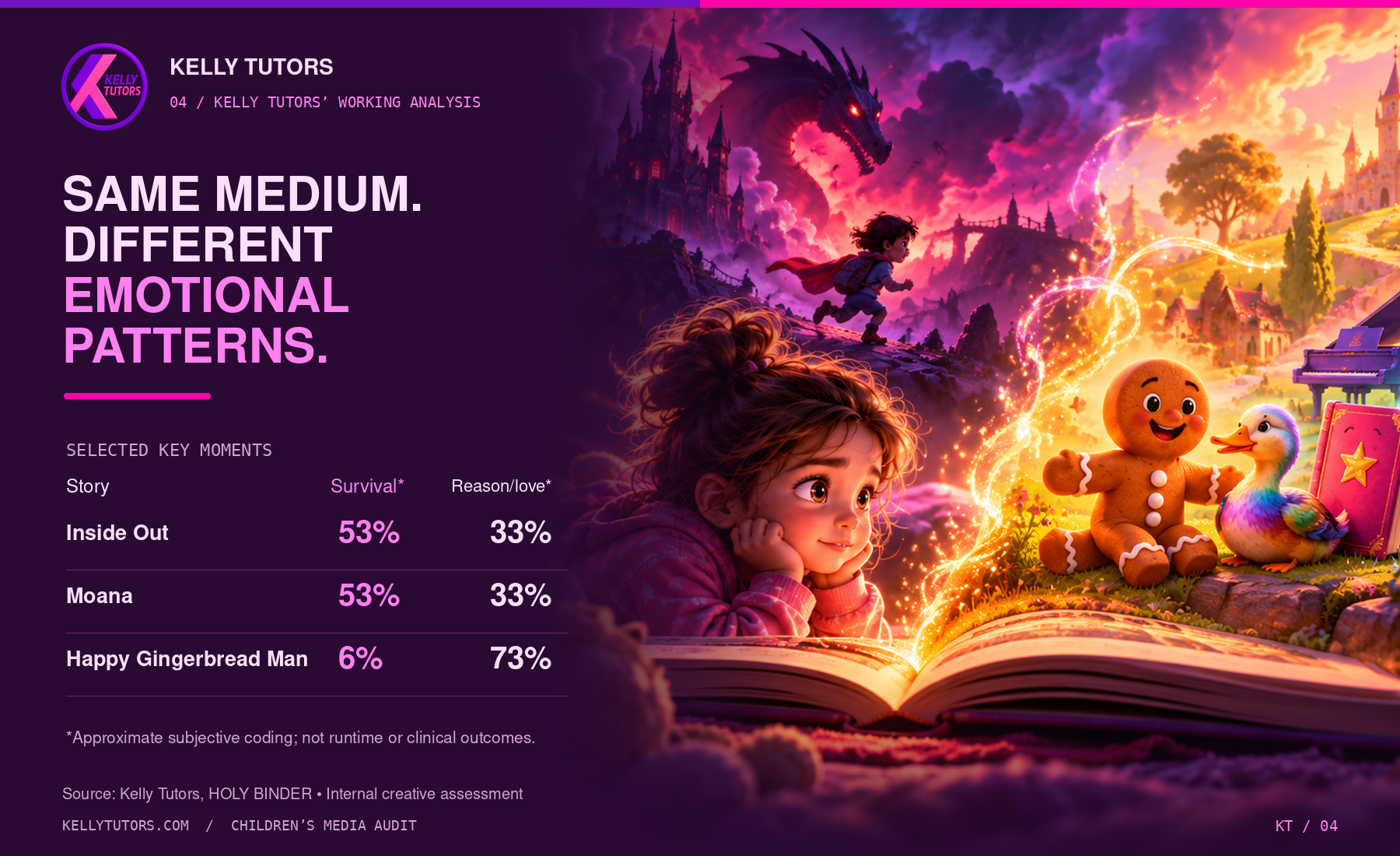
My working materials examine selected key moments in family films and compare them with the creative choices in The Happy Gingerbread Man.
In the current assessment of my book, approximately 6% of selected moments fall into the survival/trauma grouping and approximately 73% into reason, love, and related categories. These are preliminary, subjective classifications. They are not percentages of runtime, measurements of a child’s emotional state, or proof that my book produces a particular developmental outcome. Other moments fall into other categories.
These assessments help me ask better design questions. If most of the moments I select involve pursuit, abandonment, coercion, or helplessness, could the story make more room for discovery, skill, humor, and cooperation?
For stronger comparisons, the method needs a consistent definition of a “key moment,” a transparent coding guide, scene-level records, and independent reviewers. That work matters: a colorful percentage should invite examination, not replace it.
READ MORE ON THIS TOPIC… https://www.kellytutors.com/blogs-for-parents-and-educators/the-story-behind-the-percentage
Follow Kelly Tutors on Twitter: https://x.com/kellytutoring
Rewriting the adventure
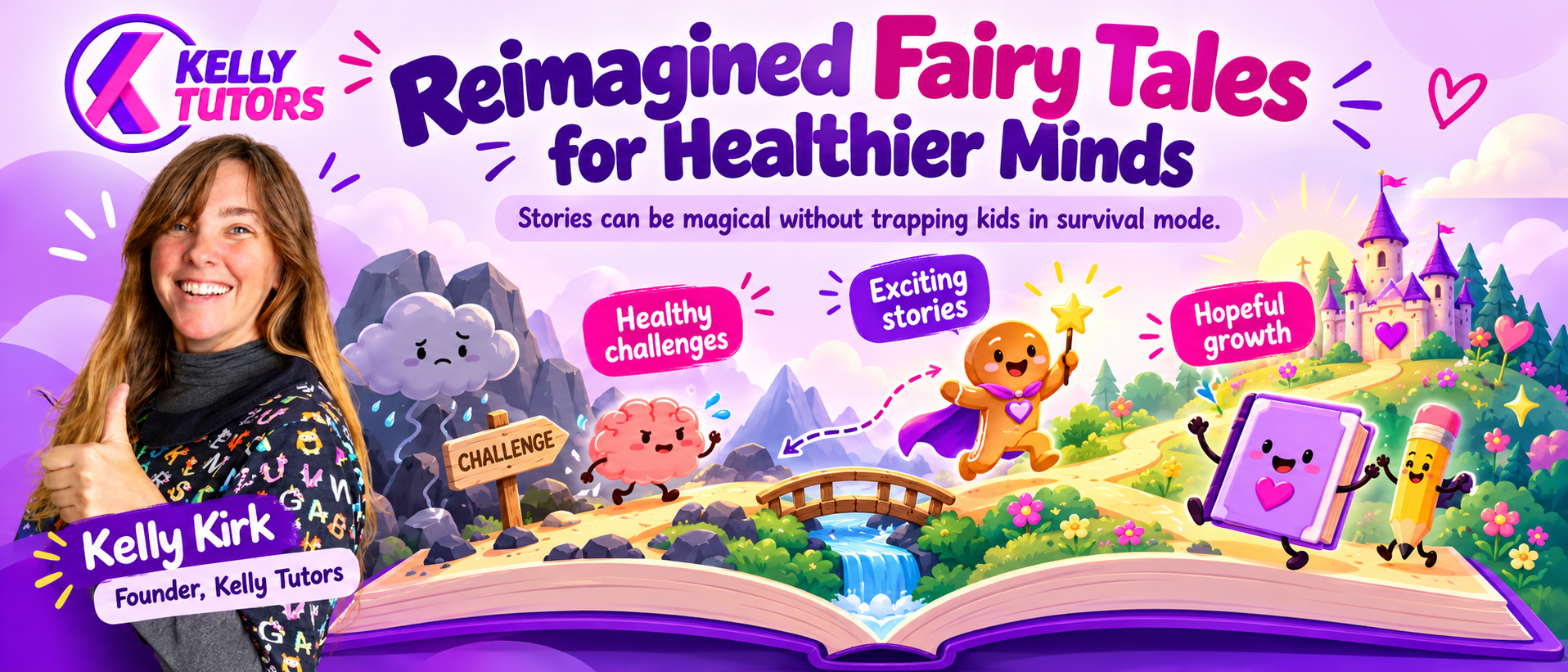
Kelly Tutors starts with a different creative brief: make the story fascinating while giving its characters meaningful ways to think, act, and connect.
In The Happy Gingerbread Man, the creative emphasis is on friendship, questions, helpful companions, and belonging. In The Three Persistent Pigs, building becomes an opportunity to learn, cooperate, and consider how one household’s choices affect its neighbors. My Sleeping Beauty work explores autonomy and self-respect.
The adventure can include mistakes, disagreement, disappointment, and danger. The question is how characters respond. A compelling turning point might be a good question, a respected boundary, an inventive solution, or someone deciding to help.
READ MORE ON THIS TOPIC…
The platform is part of the lesson, too
Content is only one part of a child’s media experience. The surrounding system matters: advertising, purchases, privacy, recommendations, and whether stopping is easy.
The American Academy of Pediatrics’ 5 Cs offer a practical way to consider the child, content, calm, crowding out, and communication. That shifts the conversation toward the context and quality of media use, alongside time spent.[3]
Manipulative design is also a documented concern. In the Epic Games case, the FTC announced separate agreements involving a $275 million children’s privacy penalty and $245 million in consumer refunds over dark patterns and billing practices. These were distinct parts of the action, not one penalty for one issue.[4]
My creative response is to ask what media gives back to children: useful understanding, something to make, a question to discuss, or a skill to try away from the screen.
Stories should open a conversation
Try asking:
“What could the character do next?”
“Did that feel fair?”
“Who respected their choice?”
“What would you change?”
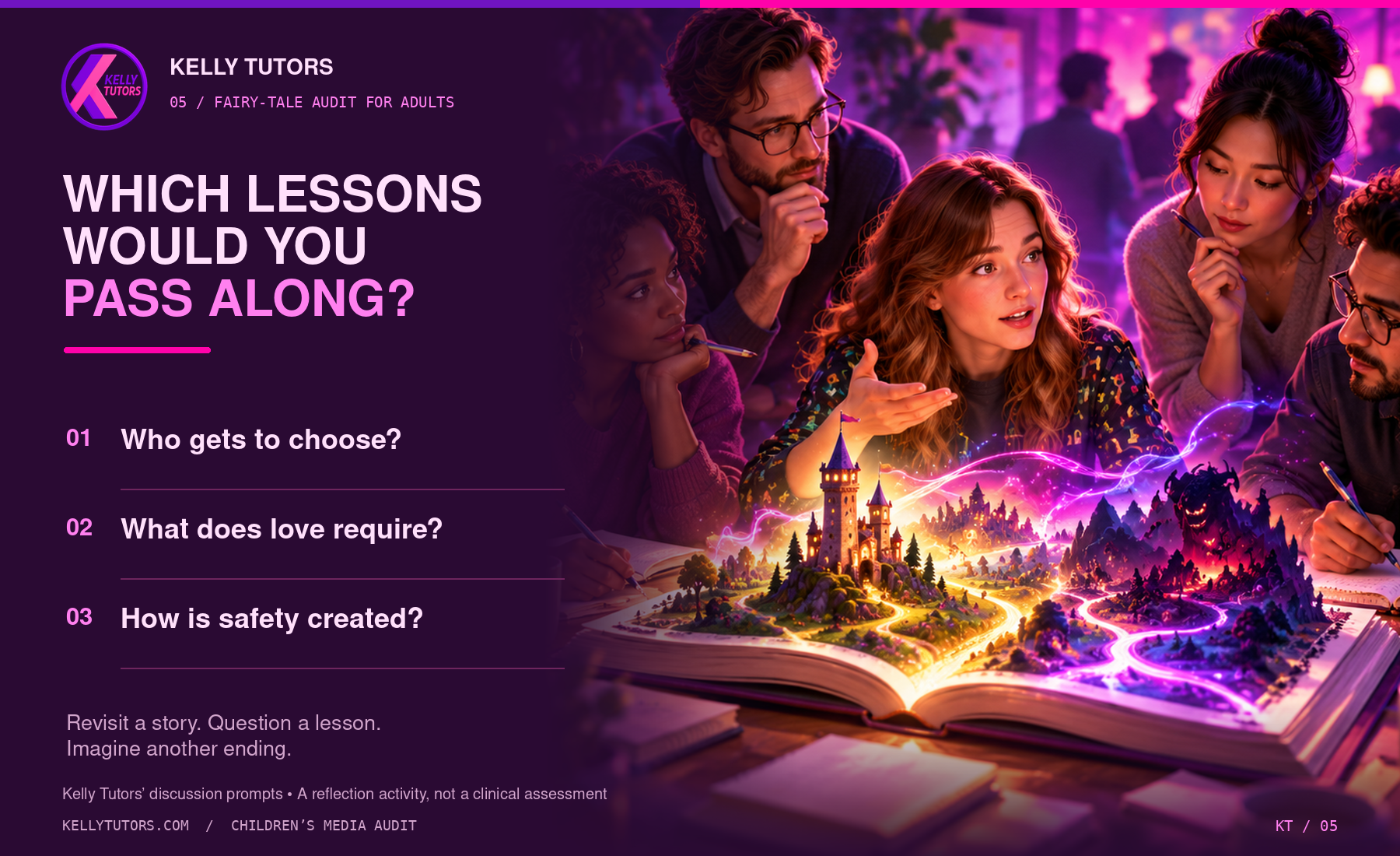
At the Kelly Tutors Fairy-Tale Audit for adults, I’m asking participants to revisit the stories they grew up with and contribute their perspectives. This is a community reflection activity, not a clinical assessment or a representative study.
What did those stories teach you about love, safety, beauty, obedience, trust, independence, and belonging? Which lessons would you pass along? Which would you rewrite?
I’m bringing this conversation to Creative Corner at the Seattle AI Week Summit on October 27, 2026. Come share a memory, question a lesson, and imagine what children could inherit instead.
Read and explore my work at Kelly Tutors.
Sources and approach
David R. Hawkins / Veritas Publishing: Map of Consciousness. Source for Hawkins’ own framework; cited as philosophical influence, not independent scientific validation.
Colman et al., BMJ (2014), “CARTOONS KILL”. DOI: 10.1136/bmj.g7184. Film-content study; not a study of children’s responses.
Federal Trade Commission: Epic Games agreements, December 2022.
Kelly Tutors’ selected-moment figures come from its current internal creative materials, including the “HOLY BINDER” and Kelly Tutors Media Philosophy Research. They are presented as preliminary interpretation, separately from published research. No clinical outcome is claimed.
