
Why I Rewrote Sleeping Beauty to Teach My Students About Consent
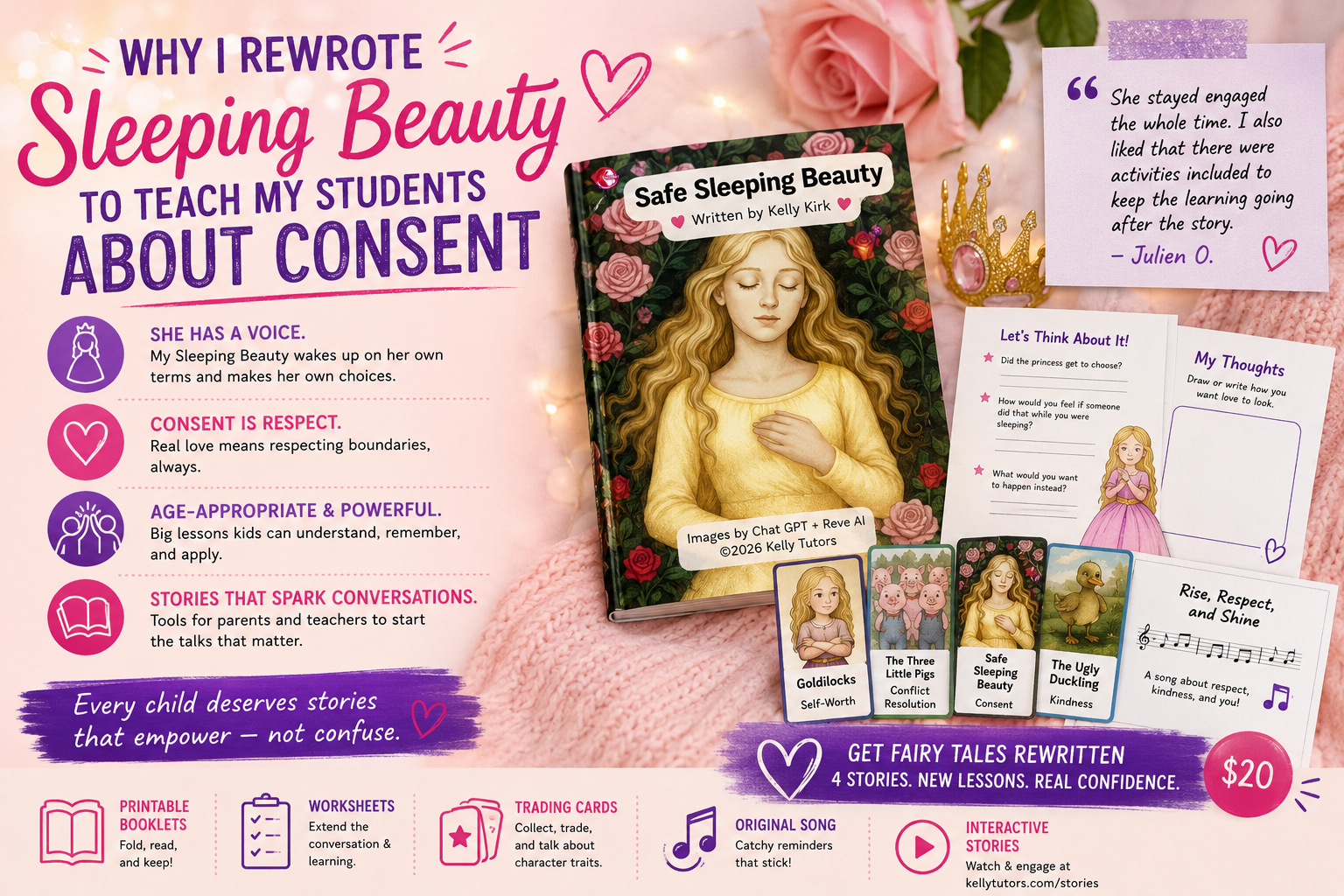
Let me tell you the moment that made me rewrite Sleeping Beauty.
I was watching kids interact with the classic version of the story, and it hit me -- the entire climax revolves around a man kissing an unconscious woman, and we present it as the most romantic moment in the whole tale. The princess has no say. She's asleep. She didn't ask for it. And every kid watching absorbs the message: that's love.
No. That's not the lesson I want any child walking away with.
So I rewrote it. In my version, Sleeping Beauty is still a beautiful story with magic and wonder. But the core message shifts to consent -- the idea that your body is yours, that nobody gets to make decisions about it while you're not able to speak for yourself, and that real love respects boundaries.
Some people hear "consent" and think it's too heavy for young kids. I completely disagree. Consent isn't just about romantic relationships. It's about a five-year-old learning to say "don't hug me right now" and having that respected. It's about a seven-year-old understanding that they get to decide who touches them. These are foundational life skills, and the earlier we normalize them, the safer our kids are.
When I put together my White House proposal on children's content, one of my recommendations was age-appropriate labeling for kids' media. For elementary-aged children, that might look like simple, honest flags -- things like "Real teachers don't look like this" -- that help kids start questioning what they see instead of just absorbing it. The Sleeping Beauty rewrite comes from that same place. I want kids to engage with stories critically, even at five years old.
My version keeps everything kids love about the fairy tale. The magic is still there. The adventure is still there. But instead of a passive princess waiting to be saved by a kiss she never consented to, kids get a character with agency. And the conversations that come out of reading it together are genuinely powerful.
Parents, you don't need to be a therapist to have these talks. Read the story with your kid. Then ask simple questions. "Did the princess get to choose?" "How would you feel if someone did that while you were sleeping?" "What would you want to happen instead?" Kids will run with it. They're ready for these conversations way before we think they are.
The rewritten Sleeping Beauty is part of my Fairy Tales Rewritten pack, which also includes updated versions of Goldilocks (self-worth), The Three Little Pigs (conflict without violence), and The Ugly Duckling (bullying backfires). Each story comes with printable booklets, worksheets, trading cards, and an original song.
As Julien O. shared about reading the stories to his six-year-old niece: "She stayed engaged the whole time. I also liked that there were activities included to keep the learning going after the story."
These stories were made to start conversations. The Sleeping Beauty rewrite is the one I'm most proud of, because consent is a conversation every family needs to have -- and a fairy tale is a surprisingly great way to start it.
Get Fairy Tales Rewritten for $20 and start the conversation tonight.
