
Why Classic Fairy Tales Need an Update -- and How to Talk to Your Kid About It
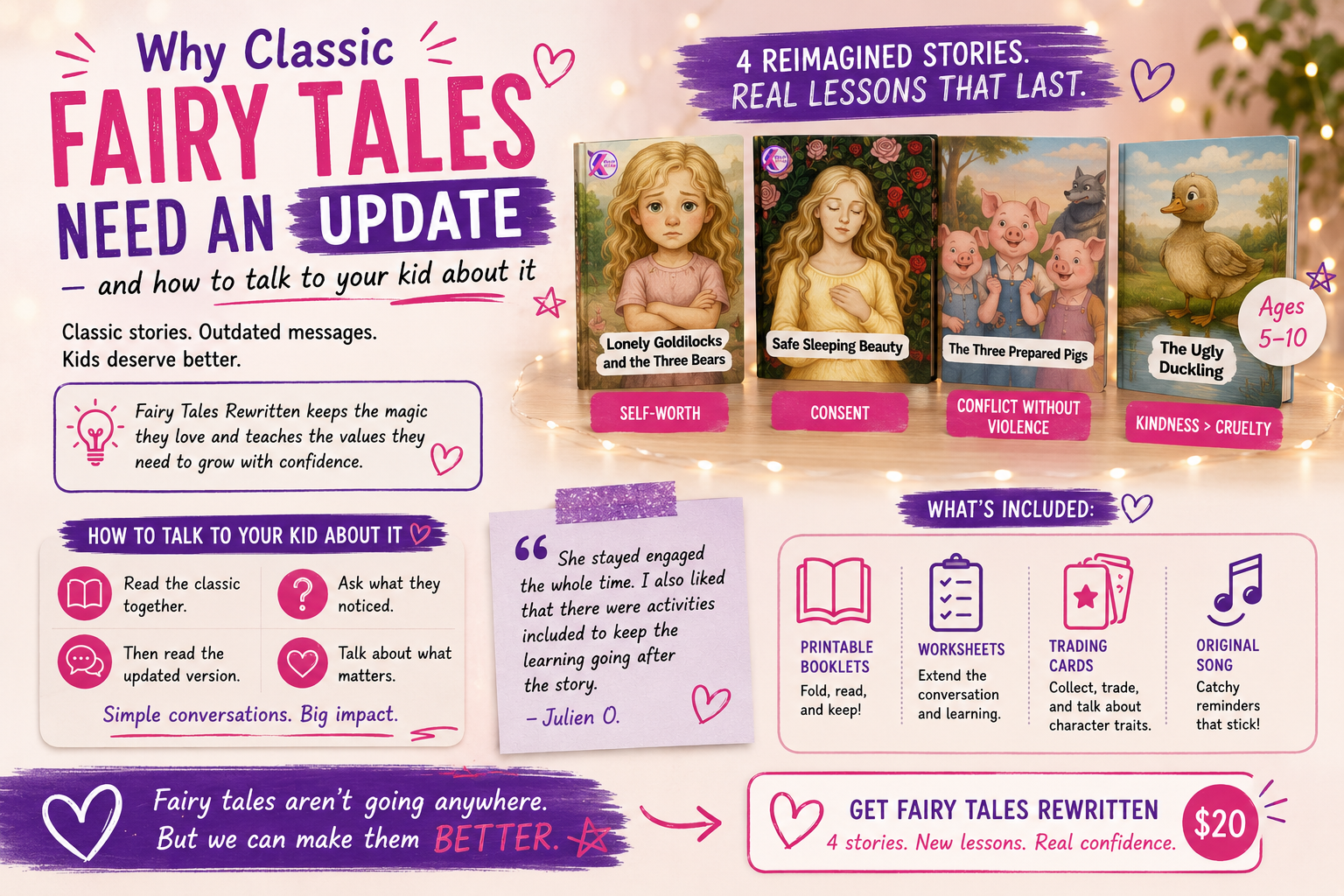
Think about the fairy tales you grew up with. Goldilocks breaks into someone's house and trashes the place -- and we frame her as the hero. Sleeping Beauty gets kissed while she's unconscious, and that's supposed to be romantic. The Big Bad Wolf gets boiled alive, and we cheer.
These stories are classics for a reason. They're engaging, memorable, and kids love them. But when you slow down and look at what they're actually teaching? The messages get a little uncomfortable.
I'm not saying throw out fairy tales. I love fairy tales. What I am saying is that our kids deserve versions that match the values we're actually trying to raise them with.
That's why I created Fairy Tales Rewritten -- a set of four reimagined stories for kids ages 5 to 10 that keep all the magic and adventure but swap out the outdated messages for ones that actually help kids grow.
Here's what I changed and why. In my version of Goldilocks, the story isn't about a girl who takes whatever she wants. It's about a kid learning self-worth -- figuring out what's "just right" for her without steamrolling everyone else. Sleeping Beauty becomes a story about consent, because kids are never too young to learn that nobody touches you without your permission. The Three Little Pigs tackles conflict without violence -- because you can stand your ground without destroying someone. And my version of The Ugly Duckling flips the bullying narrative so kids see that cruelty backfires on the bully, not just the victim.
When I was putting together my White House proposal on children's content, I spent a lot of time analyzing what kids are actually absorbing from the media around them. The patterns were alarming. Inappropriate themes hidden in plain sight, baked into content we assume is harmless because it's "for kids." That research lit a fire under me. If we're going to hand kids stories, those stories should be doing some good.
So how do you talk to your kid about all this? You don't need a big lecture. Just read the original version of a fairy tale together, then read the updated one. Ask your kid what they noticed. What was different? Which version did they like better? Why? Kids are incredibly perceptive. They'll surprise you with what they pick up on -- and those conversations become the real teaching moments.
Each story in the pack also comes with worksheets, printable booklets, and trading cards to keep the conversation going long after storytime ends. There's even an original song because, honestly, songs stick in kids' heads better than anything.
One parent told me her six-year-old niece "stayed engaged the whole time" and loved that the activities kept the learning going after the story was done. That's exactly what I designed it to do.
Fairy tales aren't going anywhere. But we can make them better.
