
Your Kid Sells Bracelets at School -- Here's How to Turn That Into a Real Lesson
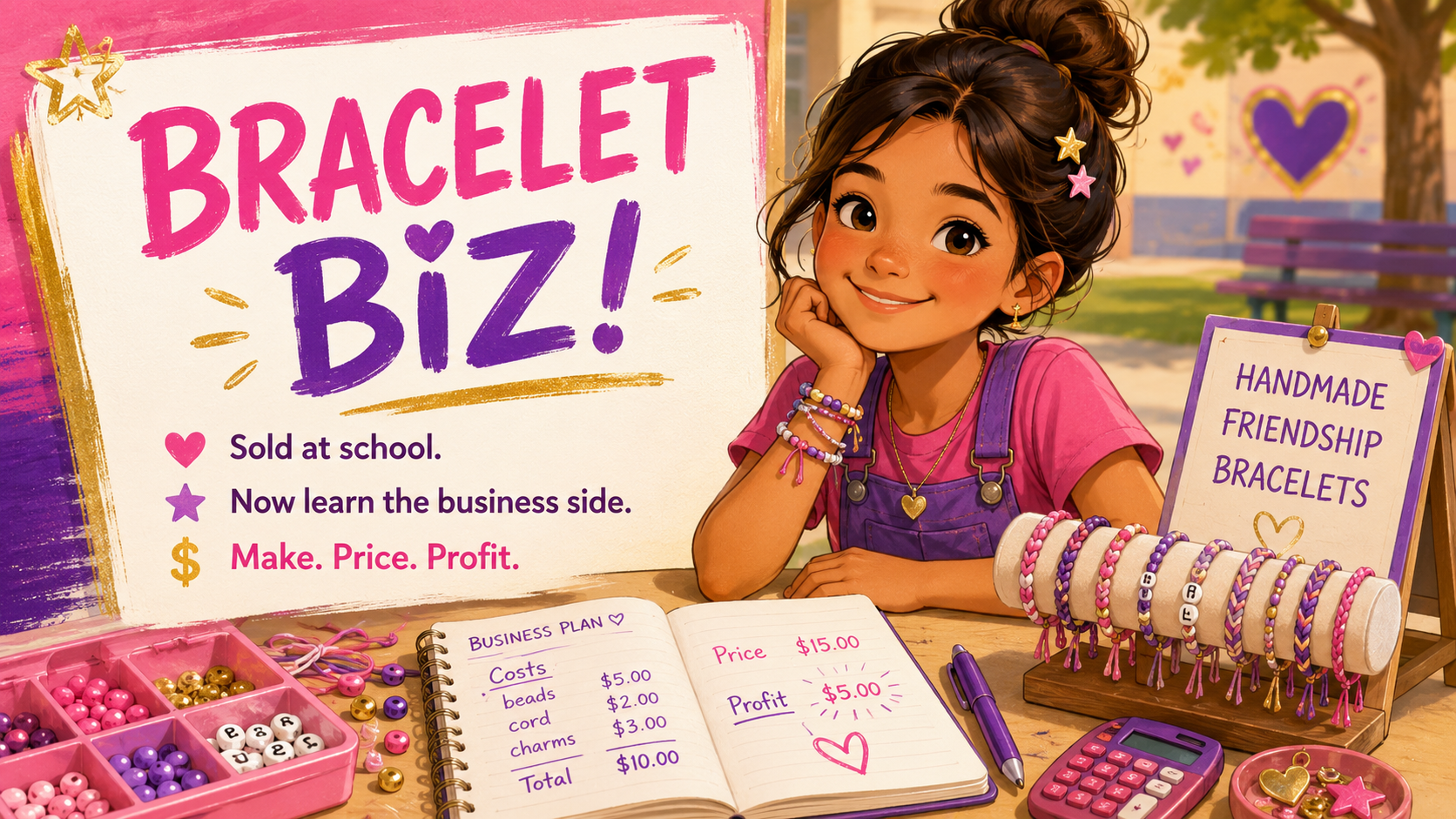
If your kid has ever come home and told you they sold friendship bracelets at recess for a dollar each, you already have a little entrepreneur on your hands. The question is: what do you do with that?
Most parents say "that's nice, honey" and move on. Some parents panic about whether their kid is even allowed to sell things at school. But here's what I'd love for you to consider: that instinct to create something and exchange it for money? That's gold. That's the seed of actual business understanding, and it deserves to be nurtured, not ignored.
My Arts and Crafts Business Simulator takes exactly that energy -- the kid who makes stuff and wants to sell it -- and turns it into a real business education.
In 25 minutes, your kid becomes the CEO of their own arts and crafts company. They're not just making bracelets. They're deciding what materials to buy, how much to charge, how to handle a rush of orders, and what to do when supplies get expensive. The AI powers the simulation, generating customers, market conditions, and curveballs. I'm there as their coach and biggest cheerleader.
Here's what makes this different from just letting your kid sell stuff at the lunch table: structure. Your kid at school is winging it -- and that's fine, that's how kids are. But in the simulator, they actually see their costs, their revenue, and their profit. They learn that the beads cost money. That their time has value. That pricing too low means working hard for nothing.
These are concepts that most adults don't fully grasp, and your kid can start learning them at seven years old.
I've been teaching kids for over 12 years -- more than 10,000 students -- and the creative kids are some of my favorites to work with because they already have the hardest part figured out: they know how to make something people want. The simulator teaches them the business side of that creativity.
Sessions are capped at 4 kids, $25 one-time, no subscription. Your kid walks away understanding how a real crafts business works -- from supply costs to pricing strategy to managing demand.
If your kid is already making and selling, let's make sure they're actually learning from it.
