
Why I Teach Media Literacy Instead of Telling Kids What to Believe
I get asked a version of this question all the time: "Kelly, why don't you just tell kids the truth about insert topic]?"
And my answer is always the same. Because "the truth" as delivered by any single person -- including me -- is still filtered through that person's biases, experiences, and blind spots. And the moment I position myself as the arbiter of truth for a child, I've created dependence instead of independence.
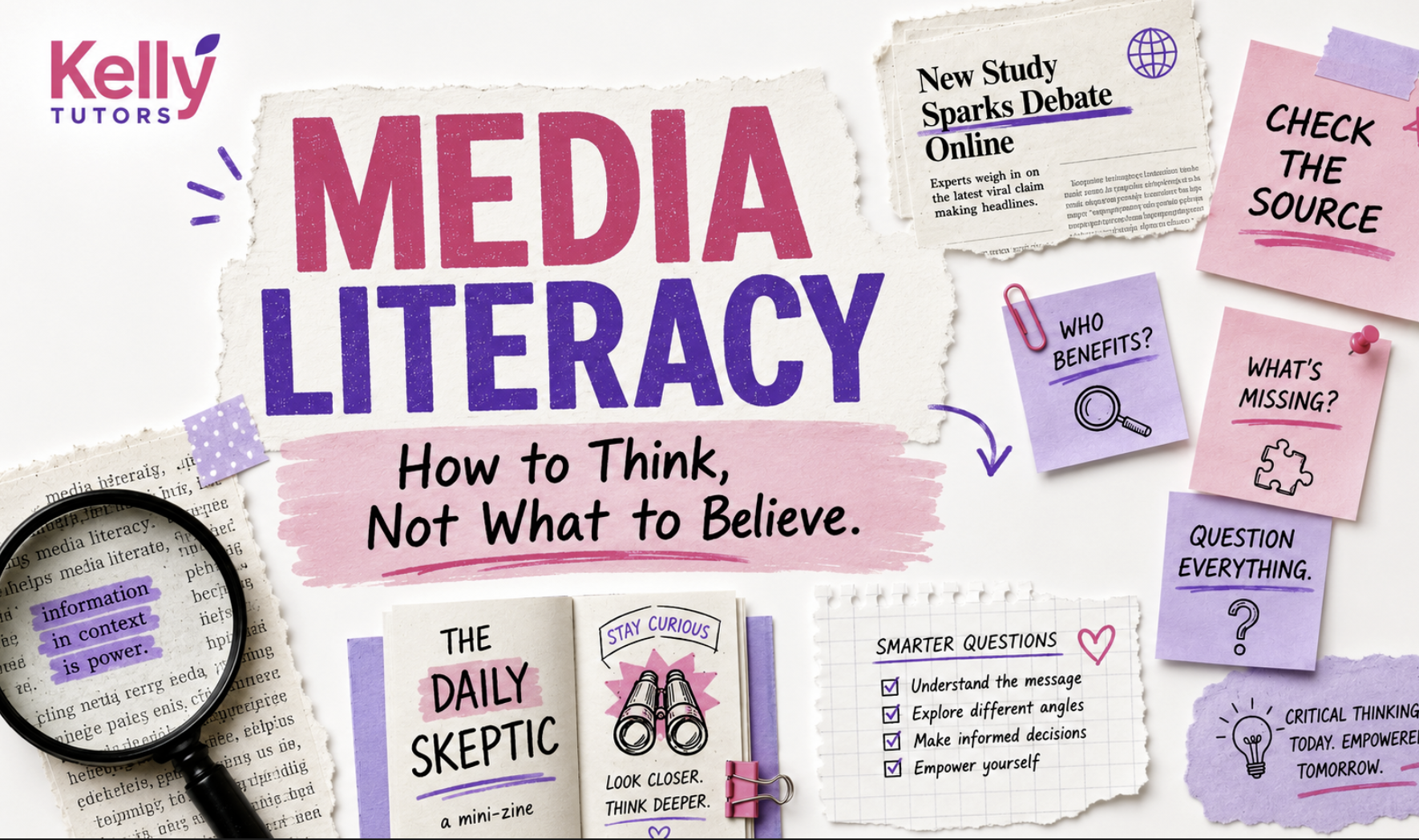
That's why I teach media literacy instead of telling kids what to believe.
My mission is to help kids, families, and teachers identify the way they're being manipulated. Not to replace one set of talking points with another. The skill I'm building in students is recognition -- the ability to look at a piece of content and understand the techniques being used to persuade them, whether that content comes from the left, the right, a corporation, or a well-meaning nonprofit.
I have a class called "Doomscrolling for Climate Change." The name gets people's attention, and that's intentional. Doomscrolling is something kids are already doing. Climate change is something they're already seeing in their feeds. Instead of pretending those things don't exist, I use them as the raw material for building critical thinking.
In that class and in my Climate Change for Kids download pack, kids learn to analyze headlines, flip scripts, identify emotional manipulation, and separate claims from evidence. They don't walk away with a bumper sticker opinion. They walk away knowing how to evaluate information for themselves.
I attended a university lecture on politicization in media that reinforced everything I'd been seeing in my own research. The takeaway was clear: explaining WHY content is manipulative gives students agency rather than creating dependence on filters. When a kid understands that a headline was written to make them feel scared, they can choose how to respond to that fear. When they don't understand that, the fear just washes over them and shapes their worldview without their consent.
This applies to every topic, not just climate change. Financial news, health claims, political content, even advertising aimed at kids -- the media literacy framework is universal. Once a child learns to spot persuasion techniques in one context, they start seeing them everywhere. That's not cynicism. That's power.
Parents, I know it can feel risky to not hand your kid a clear answer. But the research is overwhelming: kids who learn to evaluate information independently are more resilient, more confident, and less susceptible to manipulation from any direction. You're not leaving them without guidance. You're giving them the ultimate guidance -- the ability to think.
Get the Climate Change for Kids pack and start building these skills for $20.
