
Three rescued fairy tales, and the creative choices that give their characters room to grow.
1. A different kind of turning point
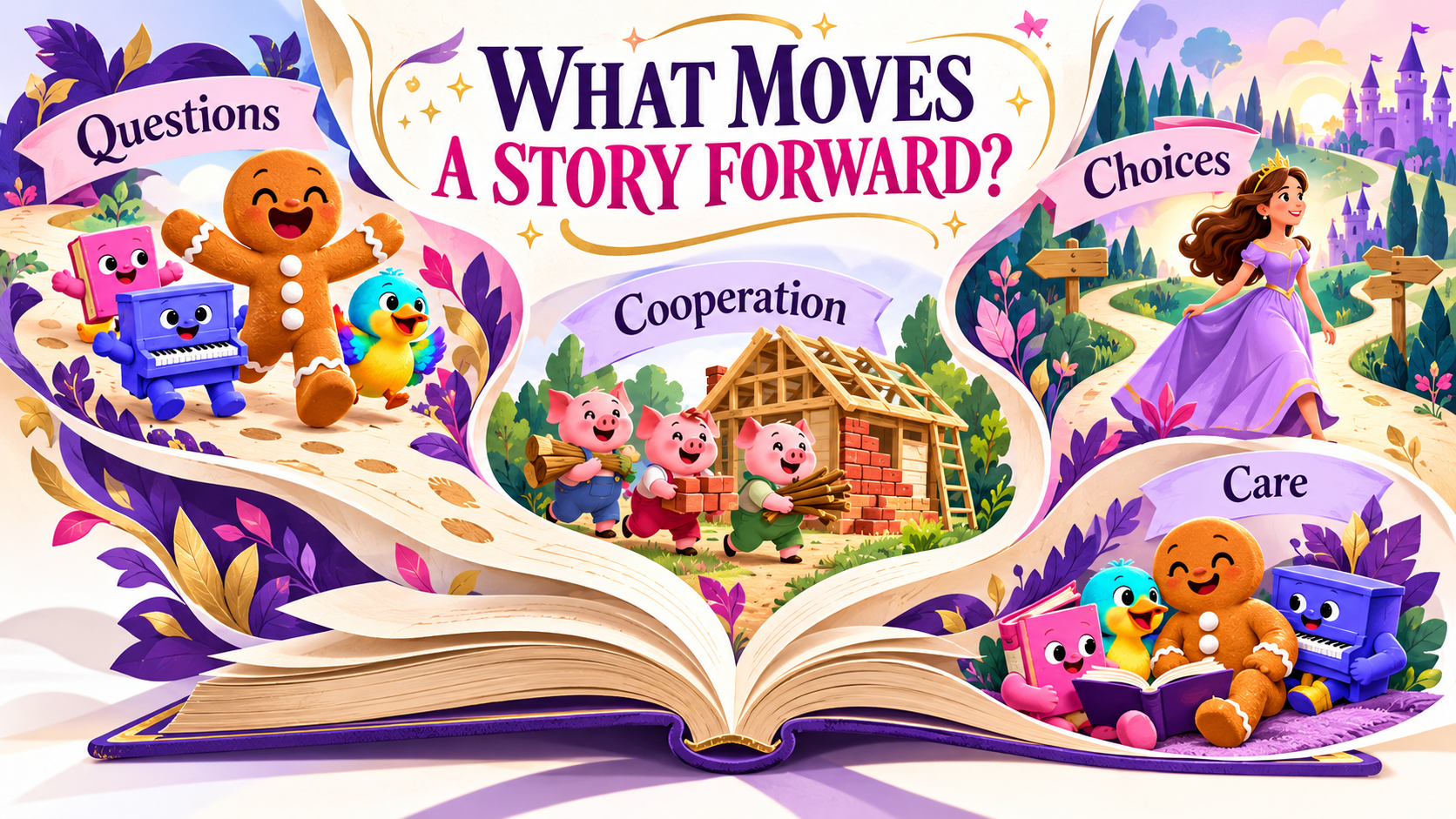
Think about the moment a story changes direction. A character might discover a secret, make a mistake, misunderstand a friend, or realize that a plan isn’t working.
Each of those moments opens a door for the writer. Will the character ask a question? Double down? Notice somebody else’s needs? Try something new?
At Kelly Tutors, I’m interested in the choices that fill the space between a problem and its resolution. Stories can be exciting, funny, surprising, and emotionally rich while giving characters ways to think and act.
In my rescued fairy tales, I explore what happens when friendship, practical skills, self-respect, and consideration for others become part of the adventure.
2. The Happy Gingerbread Man: curiosity has company
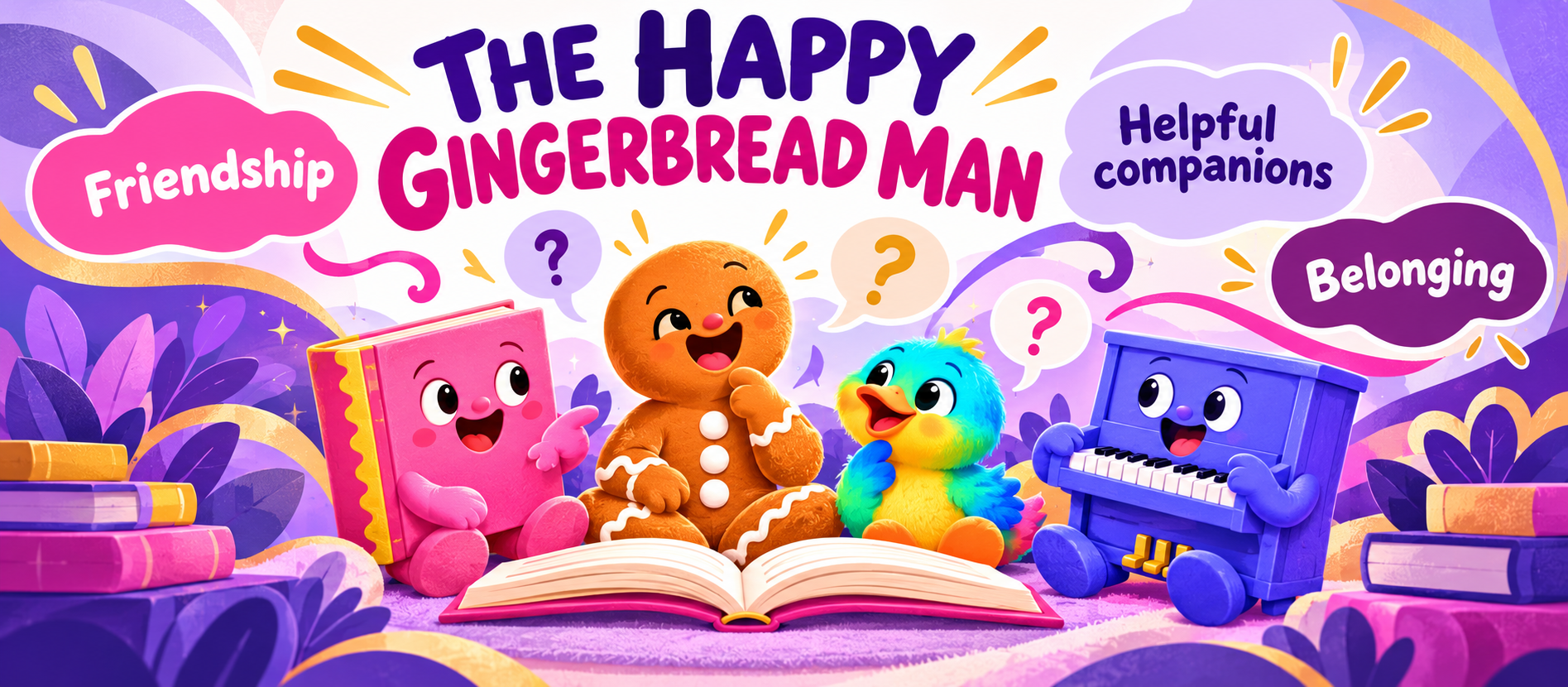
In The Happy Gingerbread Man, the journey is shaped by companions as well as by the main character. Book, Piano, and Quacky bring their own presence to the adventure, creating opportunities for the friends to learn, notice, and respond together.
I love the idea of a character asking questions instead of having to know everything immediately. Curiosity can be active: Who are these people? What is happening? What do I need to understand before I decide what to do?
The story includes uncertainty, but uncertainty does not have to mean isolation. Friends can offer support, and characters can make choices while looking out for one another.
Returning home also gives belonging a place in the story. Adventure and connection can live in the same book.
3. The Three Persistent Pigs: a house is part of a neighborhood

In The Three Persistent Pigs, building a house is more than a race to finish. The siblings have different interests and approaches, and their decisions can affect the people around them.
One pig loves music and dancing. When a party in a house with thin walls wakes the wolf, the story has a problem to work through: how can someone enjoy their home while also considering a neighbor?
That gives the characters room to notice consequences, take another perspective, and make changes. Building sturdier houses becomes an opportunity to practice persistence and think about how a home fits into a community.
I’m interested in that kind of conflict because it can make space for more than one person’s needs. A noisy celebration and a neighbor who needs rest can both matter.
4. Safe Sleeping Beauty: care begins with choice
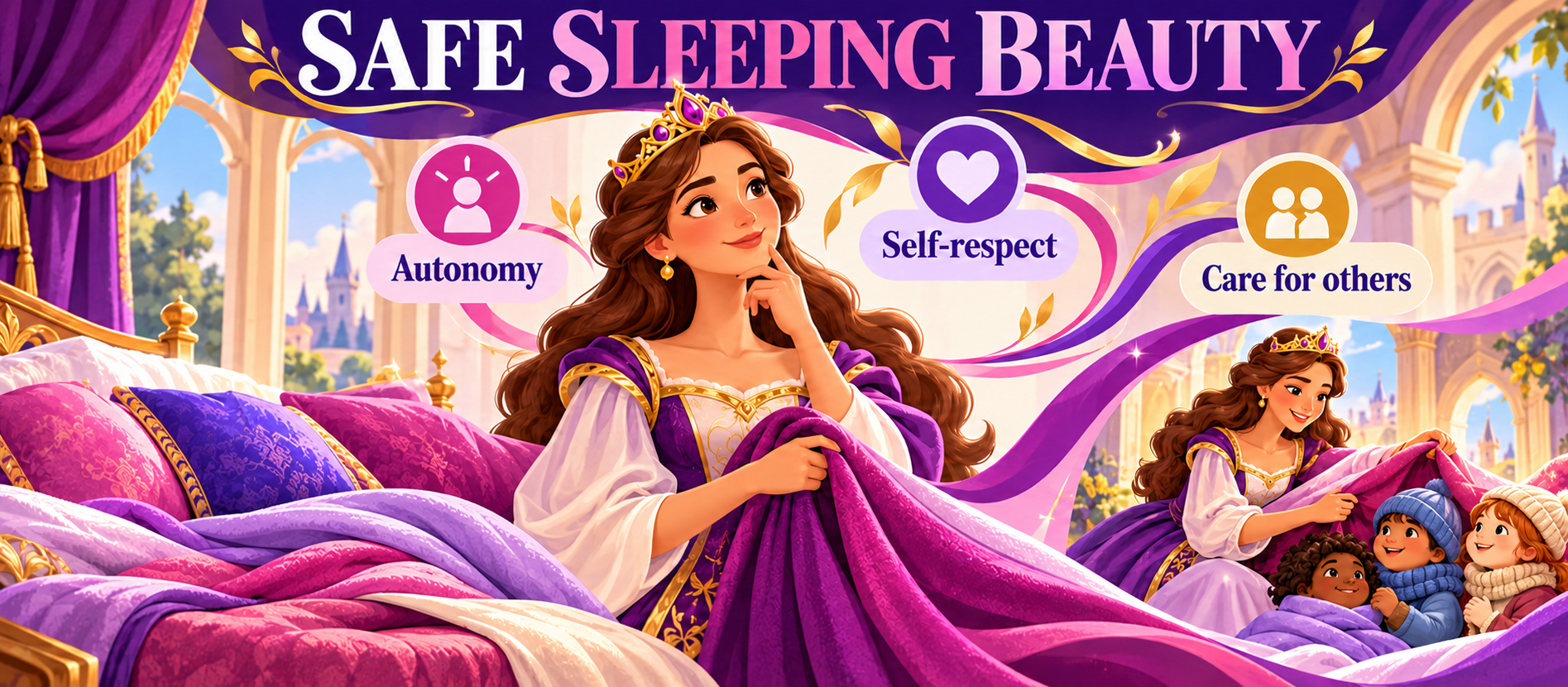
My Sleeping Beauty work explores autonomy and self-respect: what it means for a character to have a voice in decisions about her own life.
I also want her choices to reach beyond the castle. When she considers using fabric to help children who are cold, care becomes something she can actively practice.
That creates storytelling possibilities around judgment, generosity, and boundaries. A character can care about other people and still have a say in what happens to her. She can be kind without giving up her self-respect.
For me, that makes the familiar tale worth revisiting. What changes when we ask what the princess wants, what she notices, and what she chooses to do?
5. Give the characters something meaningful to do
Mistakes, disappointment, disagreement, and danger can all appear in an adventure. The next creative decision is what happens in response.
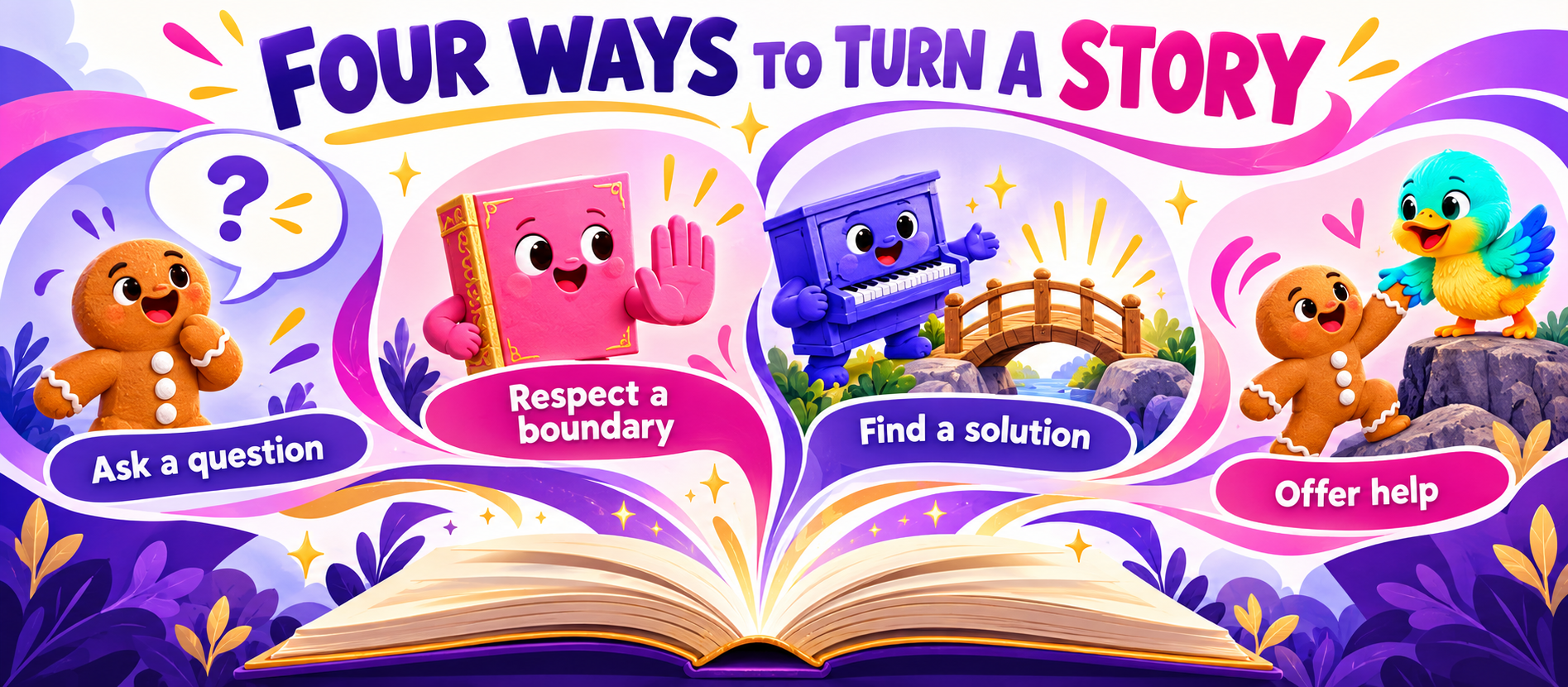
A turning point might be:
A good question: A character pauses to understand something that was easy to assume.
A respected boundary: Someone says no, and the story gives that choice meaning.
An inventive solution: Characters use a skill, an object, or an unexpected idea to address a problem.
An offer of help: Someone notices a need and chooses to act.
These are choices I’m exploring in my own stories, not promises about a particular outcome for every reader. I hope they invite children and the adults sharing books with them to notice more possibilities for action and connection.
The stories we tell can give imagination many places to go. I want them to make room for characters who think, learn, care, and have a voice in what happens next.
Explore the stories at Kelly Tutors.
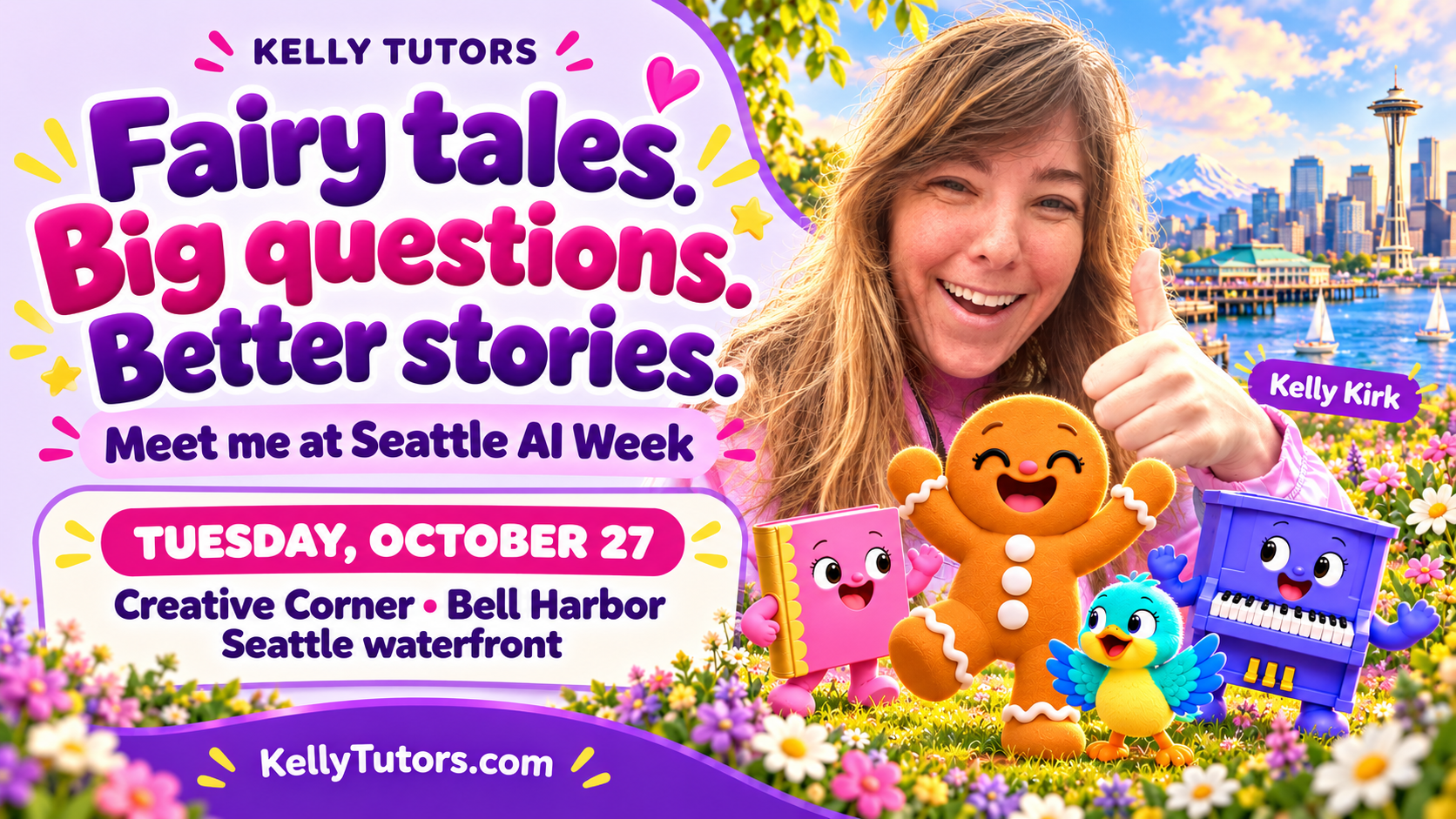
The illustrations are conceptual interpretations and may differ from the book artwork.
Read More About Kelly Tutors’ Booth and Thesis at AI Week: https://d6ur9k.s.gy/KellyTutorsSEAAIWeek26
